
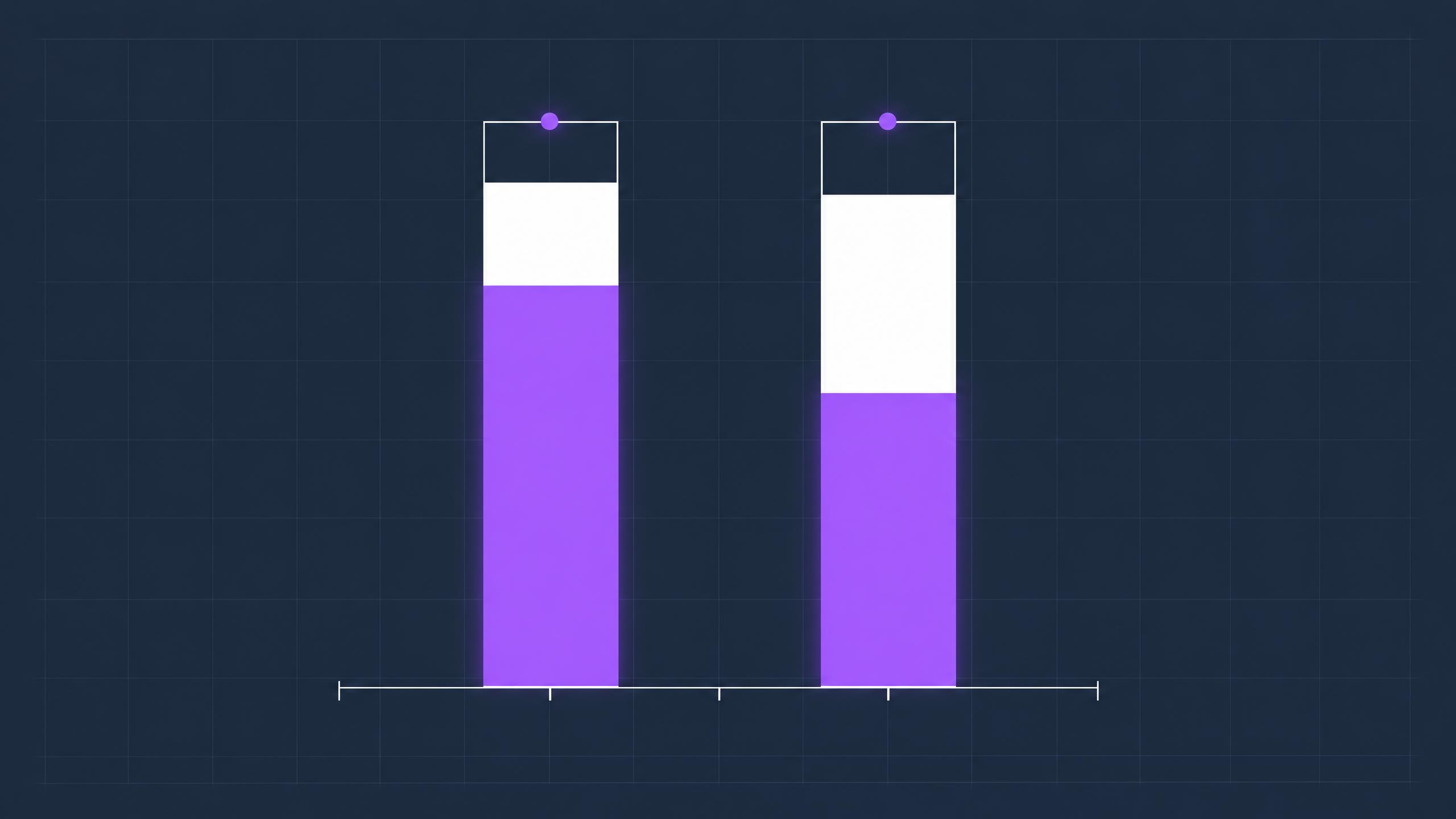
No published study tests the 70-20-10 or 5-3-1 ratios, so both are planning defaults rather than measured standards. Both keep promotional posts to about one in ten. They disagree on curation: 70-20-10 allows about 20% of posts to be shared from others, while 5-3-1 allows about 56%. For a small business, the more useful question is whether the mix can be sustained at your posting volume and judged by visits, calls and sales.
- 70-20-10 sorts posts by purpose: 70% educational or entertaining, 20% curated from other sources, 10% direct promotion.
- 5-3-1 (Hootsuite's version) sorts a nine-post cycle by source: 5 curated, 3 original, 1 promotional.
- The studies that compare post types point in different directions, so neither ratio has been confirmed.
- At three posts a week, a 10% promotional share means about one promotional post every three weeks.
- Judge the mix over at least eight weeks by visits, calls and sales against a baseline, not by the likes of single posts.
Where do the 70-20-10 and 5-3-1 rules come from?
Neither rule comes from social media research. The 70-20-10 split comes from workplace learning, and its social media version is a later adaptation.
The Center for Creative Leadership says its 70-20-10 guideline draws on more than 30 years of research into leadership experience. It splits learning into 70% challenging experiences and assignments, 20% developmental relationships, and 10% coursework and training (Center for Creative Leadership). Leaders ADAPT says the ratio was published in 1996 and rests on a survey of how executives believed they learned, so it is a guideline rather than a measurement (Leaders ADAPT). A 2018 article by Alan Clardy challenges the evidence behind it under the title "70-20-10 and the Dominance of Informal Learning: A Fact in Search of Evidence."
The social media version is different. Sprout Social defines it as 70% of posts educational or entertaining, 20% curated from other sources to nurture connections, and 10% direct brand promotion. No single person is credited with adapting the split to social media.
The 5-3-1 rule is Hootsuite's. Its 2026 business guide describes a nine-post cycle: five posts curated from other sources, three original posts and one direct promotional post. Hootsuite says the cycle keeps a feed from becoming overly sales-focused. Other publishers count it differently. One describes a ten-post version, and a 5-3-2 variant with two personal posts is also in circulation, so check which version you are using.
Do not confuse it with the Instagram routine that shares its name. That is a daily set of engagement actions, such as posting, commenting and following, not a content mix.
What does each rule ask you to post?
Both rules keep promotion to about one post in ten. They differ on curation, because 70-20-10 sorts posts by purpose and 5-3-1 sorts them by source.
Share of posts under each rule, with the nine-post version of 5-3-1 shown as counts.
| 70-20-10 | 5-3-1 (Hootsuite's nine-post cycle) | |
|---|---|---|
| What it sorts posts by | Purpose of the post | Source of the post |
| Educational, entertaining or original | 70% (about 6 of 9) | 3 of 9 original |
| Curated from other sources | 20% (about 2 of 9) | 5 of 9 curated |
| Direct promotion | 10% (about 1 of 9) | 1 of 9 promotional |
| Where the version comes from | Sprout Social's social media definition | Hootsuite's 2026 business guide |
A curated post that teaches something can count toward the 70% in 70-20-10, so the two rules do not map exactly onto each other. The gap in curation matters most for a small business. Under 5-3-1, five of every nine posts come from someone else; under 70-20-10, about two of nine do. A feed built mostly on shared posts looks like a curator's feed, which leaves less room for the brand's own teaching. In our reading, a business that sells its own expertise needs the second.
Is there evidence that either ratio works?
The closest evidence compares types of post, not ratios, so it cannot confirm either split. Three studies are relevant.
- A 2025 study in Cureus analysed 152 public Instagram posts by Singapore orthopaedic surgeons, clinics, hospitals and professional bodies, from March 2023 to March 2025. Educational posts averaged 13.5 likes and promotional posts 13.0, a gap of about half a like across 32 promotional posts (The Role of Instagram in Orthopaedic Patient Education and Engagement: A Content Analysis From Singapore).
- A 2021 study in Arthroscopy, Sports Medicine, and Rehabilitation of influential US orthopaedic surgeons found that nonpromotional posts drew significantly more comments than promotional posts (Eliciting Emotion and Action Increases Social Media Engagement: An Analysis of Influential Orthopaedic Surgeons).
- A 2023 study in Higher Education Quarterly by Capriotti, Martínez-Gras and Zeler analysed university posts on Twitter, Facebook and LinkedIn. Content the universities created averaged 169 interactions per post, against 126 for content they shared.
The studies point in different directions on promotion. The university study is the closest to the curation question, but it covers universities on three platforms rather than small businesses on Instagram. Read all three as evidence about particular samples, not as a verdict on either rule.
Do the rules work for a small team?
Both rules are easiest to apply across a planning cycle rather than week by week. Post volume decides how precisely a ratio can be applied.
Take a team that posts three times a week. Under 70-20-10, that week holds about 2.1 educational posts, 0.6 curated posts and 0.3 promotional posts. A third of a promotional post cannot be published, so the 10% share works out to one promotional post about every three weeks. A nine-post 5-3-1 cycle at the same pace runs for three weeks and also holds one promotional post. At this volume both rules land in the same place, so the choice between them comes down to curation. The how often to post guide covers cadence by platform.
Volume also limits what a test can show. Over eight weeks at three posts a week you publish about 24 posts, and only two or three of them are promotional. That is too few to compare promotional and educational posts on engagement. Judge the whole mix by the business results it brings.
How can a small business test one of these rules?
Run the rule for eight weeks against a four-week baseline, and follow each post to visits, calls and sales, not only likes.
- Record the baseline. For four weeks, keep your current posting pattern and log each post's reach, saves, shares, profile visits and link clicks.
- Tag every link. Add UTM parameters to the links in posts and bios so that visits show under their own source in GA4.
- Choose one rule and plan the calendar in cycles. Label each slot curated, original or promotional before the week starts.
- Hold everything else still. Keep the platform, posting times and format the same, so the mix is the only thing that changes.
- Log calls and sales with their source. Ask each new caller and buyer how they found you, and record the answer next to the date.
- Decide with a verdict. Keep, change or drop the rule, based on visits, calls and sales against the baseline.
Saves and shares are early signals worth tracking, because they show whether people value a post enough to keep it or send it on. Visits, calls and sales decide the verdict.
A sale can be credited to a post only when the buyer's path is tracked. Without that, count visits and calls, and note which posts sent them. The social media KPIs guide lists the measures to set up first, and the ROI guide shows how to build the calculation.
How does Reelistic plan the mix for a client?
Reelistic's managed process starts from the business. Onboarding collects the brand book, visual references, services, audiences and guidelines. The strategy is then delivered for the client's approval, and the content calendar that carries the mix goes to the client for approval before anything is published (how Reelistic's onboarding and approval process works).
For a client, the first 90 days build the baseline that every later post and channel decision is judged against. Every post is treated as a test of what makes the audience act, and each test closes with a keep, change or drop verdict. The monthly report includes the tests that failed, so a mix that does not earn its place shows up in the numbers rather than staying in the calendar by habit. Senior marketers direct the AI output, and the approved calendar carries their judgment about which posts go out.
The volume follows the plan. The lightest organic plan produces three creations a week across two platforms, and the largest produces up to seven across five platforms, each adapted to every platform it is published on. At the lightest level, the cycle logic in this article applies: plan in nine-post cycles and judge them over weeks. Reelistic's managed organic social media service covers Instagram, TikTok, LinkedIn, YouTube and Facebook.
Which rule should a small business start with?
Start with the promotion cap that both rules share, and set the curated share by how much original content your team can make each week.
Three decisions follow from the evidence:
- Cap promotion at about one post in ten, and place each promotional post where it answers a question the feed has already raised. Posting only promotions is one of the common social media mistakes that stops a business from growing.
- Keep curated posts low if the feed is meant to show your own work. A feed that teaches a buyer usually needs more original posts than the 5-3-1 cycle allows, so start nearer the 70-20-10 split and test upward.
- Plan in nine-post cycles if you post three times a week or less, and judge the mix over at least eight weeks. Build the cycle into your social media strategy and content pillars.
This week, write down your baseline, choose one rule and schedule the first cycle with each slot labelled. If you want the mix planned, sent for your approval and measured against visits, calls and sales, Reelistic's managed social media service does that work for you.
Frequently asked questions
Is the 70-20-10 rule the same as the 5-3-1 rule?
No. The 70-20-10 rule sorts posts by purpose: 70% educational or entertaining, 20% curated, 10% promotional. The 5-3-1 rule sorts a nine-post cycle by source: 5 curated, 3 original, 1 promotional. Both keep promotion near one post in ten, but they disagree on how much curated content a feed should carry.
Which metric should decide whether a mix rule works?
Visits, calls and sales from each post's source, compared with a four-week baseline. Saves and shares are early signals that show whether people value a post enough to keep it or send it on. Likes alone should not decide the verdict.
How long should a test of a posting rule run?
At least eight weeks, measured against a four-week baseline, with the same platforms, posting times and formats. At three posts a week that gives about 24 posts, enough to judge the mix as a whole but not the promotional posts on their own.
Is the Instagram 5-3-1 routine a content mix?
No. The Instagram 5-3-1 is a daily set of engagement actions, not a split of content types. The content version of 5-3-1 is Hootsuite's nine-post cycle of 5 curated, 3 original and 1 promotional post.